
Fake news
Thoughts on magical thinking

Recently I’ve been trying and failing to keep a record of my days. I’d read excerpts from Alan Rickman’s diaries and have long been a fan of David Sedaris, a man who begins every day by writing down the previous ones’ events.
It will be good for me I thought. The discipline. The routine. I will learn something fundamental through doing. I will become a better writer. I will practice how to tell real stories that interest people.
You see I’ve always written things. I don’t claim that my writing is any good, although I’m desperate for that to be true. In fact it is undeniable that a lot of my writing is achingly, cringefully awful. Some of that can be forgiven with context. A record of my cats’ adventures, written aged 11, was always going to have limited appeal. To give you an insight into my creative talent at that age, I had named my cats, Agassi, Mr Grey, Blackjack, Sally Kitty and Smudge. Mr Grey, Blackjack and Smudge were unsurprisingly grey, black and tortoiseshell. Sally Kitty was a kitten when I named her. Agassi was the outlier of the bunch, in more ways than one. Small, vicious and dog like in her devotion she would follow me when called, where we would walk across fields and climb trees. I wanted her to have a name that signified the thing I loved most in the world. And at age 13, that was Andre Agassi. I shared my words with him too, writing a detailed account of my intense longing for him, sent hopefully off to his fan club.
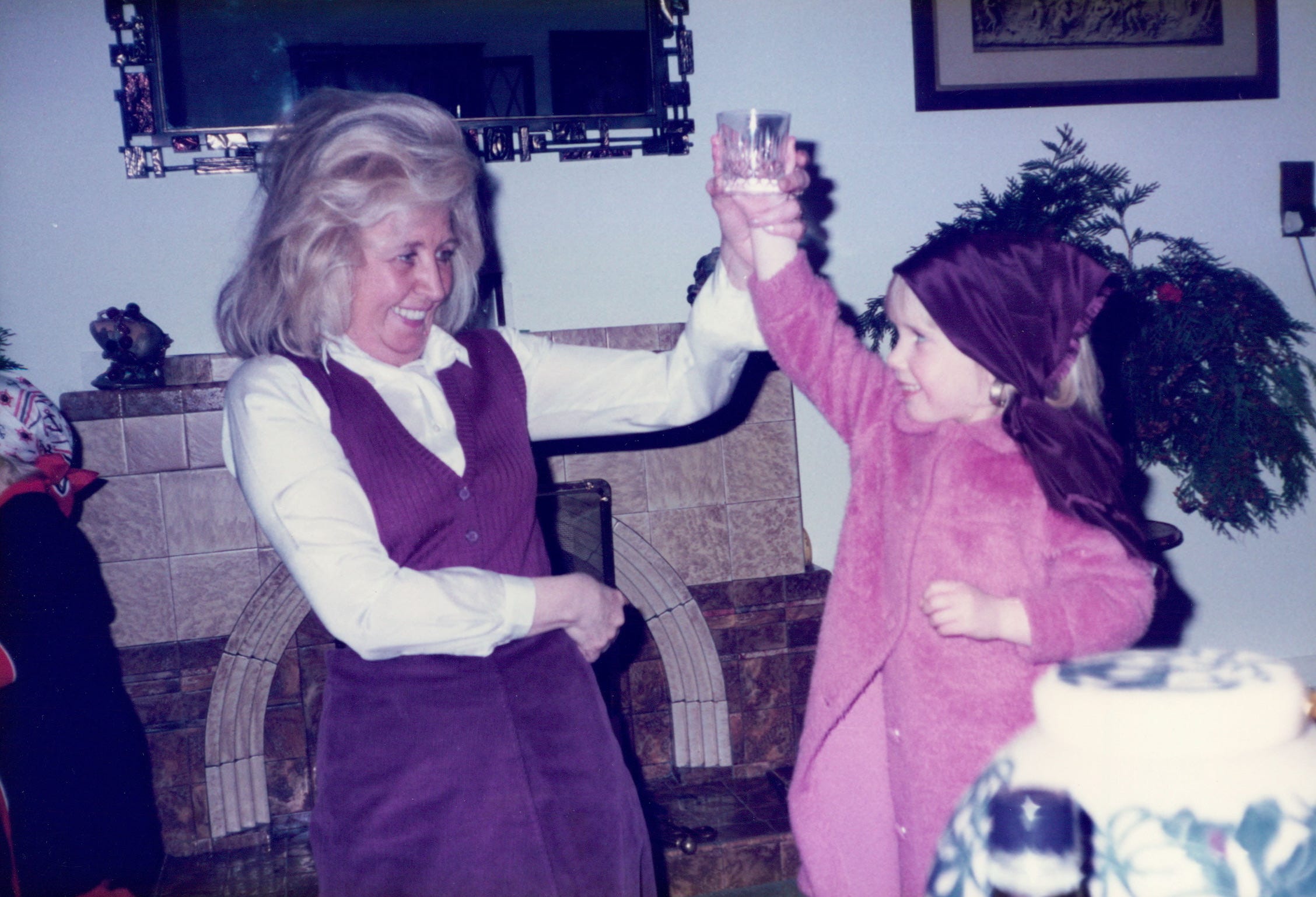
Some of my writing was done with others. I’m sat in the morning room, a place you get invited to rather than wander into willy nilly. Next to me are others, my Mother, James, my Uncle Jim.“Tell me a story, Katy, you start”, Frieda commands. We’re all sat in various places but we all have one thing in common, we’re facing the person in the room who demands our undivided attention. The idea is that we are to entertain Frieda as a group, by taking a turn at a time and saying a sentence aloud. Each person has to start off from the sentence that came before and it is fixed, unless Frieda disapproves, in which case it will be edited in real time to suit the direction she has in mind. At the time I thought that the idea for this activity was an original spark of brilliance of Frieda’s own creation. Even though I was young it was extraordinary that I had come to this conclusion. I had spent countless hours in the morning room with Frieda watching her favourite film, Out of Africa. “We should have a story now” declares Robert Redford’s character. “When I tell a story to my nieces and nephews back home, one of them always provides the first sentence”, Meryl Streep’s character replies.
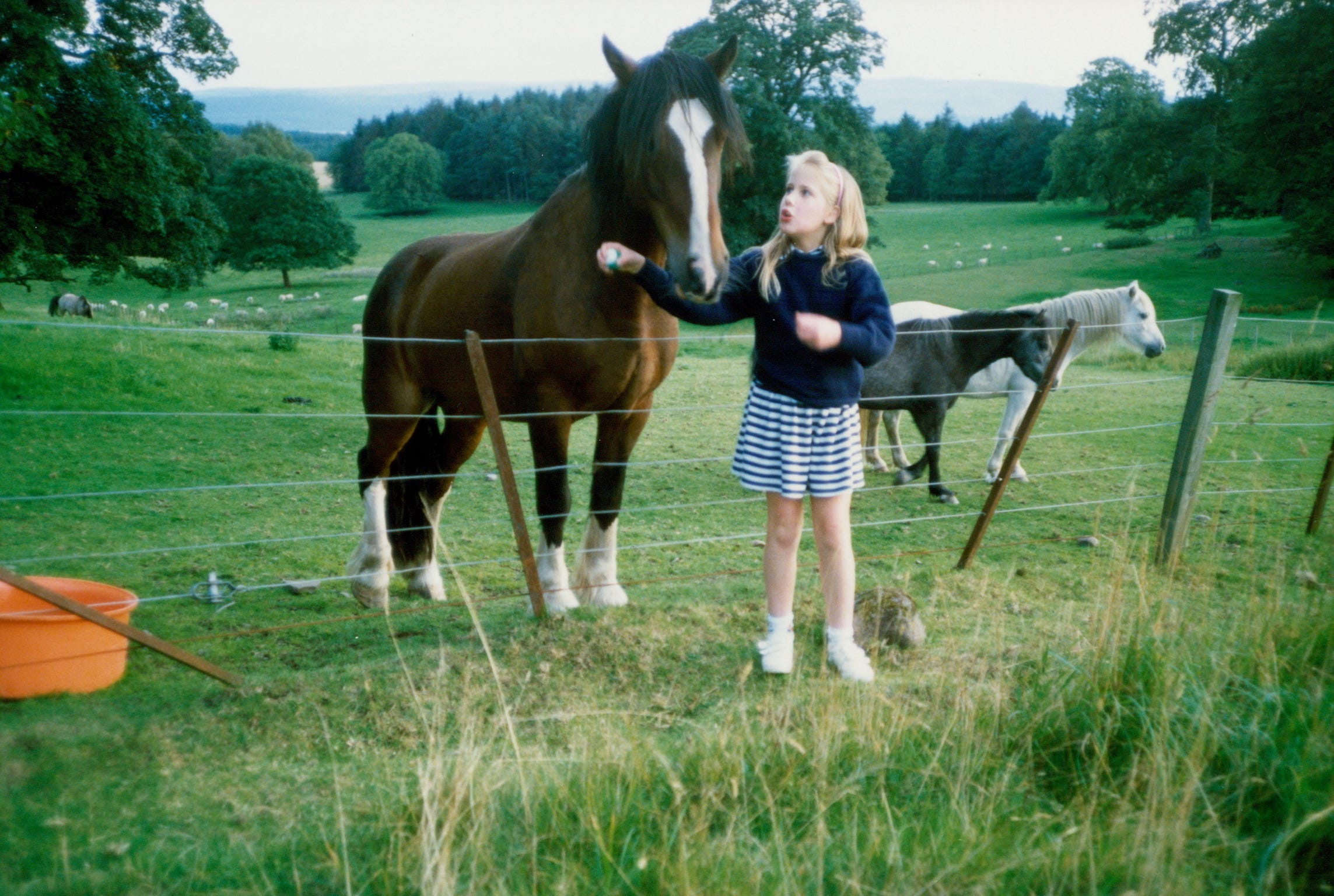
Being around Frieda was like being up close to a black hole. The very fabric of reality would routinely distort in her presence. For narcissists like Frieda this is known as “magical thinking”. As a child this was particularly confusing. “Katy let the horses out again” Frieda would declare to my wary Mother. The real culprit, James the groom, who through his own laziness had failed to tie the gate up properly, had blamed me and it suited Frieda to make me the villain. I had learned it was easier to stay quiet when accused as if I (truthfully) denied any involvement this would be taken as a direct challenge to Frieda and I would be frozen out for it. Frieda lived in a world where the stories she told must be constantly edited so that she was the heroine, the one who had to gallantly endure others, the one who was never at fault.
The last time I saw Frieda before she died was after a gap of many years. As I grew older I found it increasingly difficult to bend to her version of reality so had opted instead to remove myself from it.
I go downstairs with my family warily. Frieda sits in her armchair like an old cat, bones protruding, her white hair brushed out haphazardly, being worn like a hat many sizes too big. Her lipstick, applied by James with the skill of a drunk toddler, is drawn just outside her lips, and a fair amount of it is revealed when she smiles. She is much changed. It is truly a shock to see a person so powerful in your history so utterly diminished. Yet this is one of the best interactions I can remember having with her as an adult. It is a comfort to live in her world, the one where she pretends to be able to see when she is completely blind, where she doesn’t go out because she is so busy rather than almost totally immobile. Where she is boastful but kind. The loss of her sight means that she no longer has to work very hard to make what she believes true and with that fact I too can feel safe and no longer judged, for my outfit, my weight, my hair.
There is a power in observing, in recording, but so often in my life it has been a mirage. So often other versions would be accepted as fact when I knew they were the opposite of the truth. I suppose I grew up with fake news well before I first heard its name.
As someone who needs to write, this is an interesting problem. The best writing lies not just in what is said and how it is said but in what is left out, what is deliberately omitted in the edit. I have always struggled with the edit. My tendency is to say too much, to overshare - maybe the child in me feeling like I have to lay it all out, to make up for all the times I had to stay silent. Yet when I do attempt to create a record I can’t bear my own voice, it is all feeling, complaint and self-flaggelation.
Which leaves me here, hiding in the edit, in the things I should be able to acknowledge but are almost always left unsaid.
I think a lot at, the moment, about "needing" to write. Thinking about deconpression and processing and gently dismantling trigger stacks by making chains with words. I enjoy your writing and I'm glad you do it.